
Subtotal 0,00 د.إ

Quick Answer
Can a stomach ulcer turn into cancer? The stomach ulcer cancer link is one of the most common worries patients raise.Benign stomach ulcers do not themselves turn into cancer. However, the same underlying causes — chronic Helicobacter pylori (H. pylori) infection and long-standing stomach inflammation — are established risk factors for gastric cancer over time. Separately, some early-stage stomach cancers can look and feel like an ordinary ulcer, which is why an ulcer that doesn’t heal with standard treatment needs proper endoscopic evaluation rather than being assumed benign.
Table of Contents
Stomach Ulcer Cancer: Peptic Ulcer vs. Gastric Cancer
Recurrent burning pain in the upper abdomen, chronic acidity, or discomfort after meals is one of the most common concerns patients bring to Olive Homeopathy Clinic in Kizhisseri, Malappuram. A frequent question is whether a stomach ulcer cancer risk exists when an ulcer is long-standing.
- Peptic ulcer disease (PUD): An open sore on the inner lining of the stomach (gastric ulcer) or the first part of the small intestine (duodenal ulcer). Most ulcers form when stomach acid erodes the protective mucus layer, usually due to H. pylori infection or prolonged use of NSAID painkillers.
- Gastric cancer: Begins when cells in the stomach lining accumulate genetic mutations and grow uncontrollably, forming a tumor.
Benign Ulcer vs. Gastric Cancer at a Glance
| Feature | Benign Peptic Ulcer | Gastric Cancer |
|---|---|---|
| Primary cause | H. pylori infection, NSAID overuse, hyperacidity | Cellular DNA mutations, chronic mucosal atrophy, metaplasia |
| Typical location | Duodenum or stomach antrum | Often the greater curvature or cardia of the stomach |
| Response to treatment | Heals with acid suppression and root-cause care | Requires oncological treatment (surgery, chemotherapy, radiation) |
| Endoscopic margins | Clean, smooth, well-defined | Irregular, raised, or indurated edges |
The Link Between H. pylori, Chronic Inflammation, and Cancer Risk
A benign ulcer doesn’t “turn into” a tumor directly, but the chronic inflammatory environment that causes ulcers can, over many years and in a minority of cases, set the stage for malignant changes.Understanding this stomach ulcer cancer pathway helps explain why testing matters.
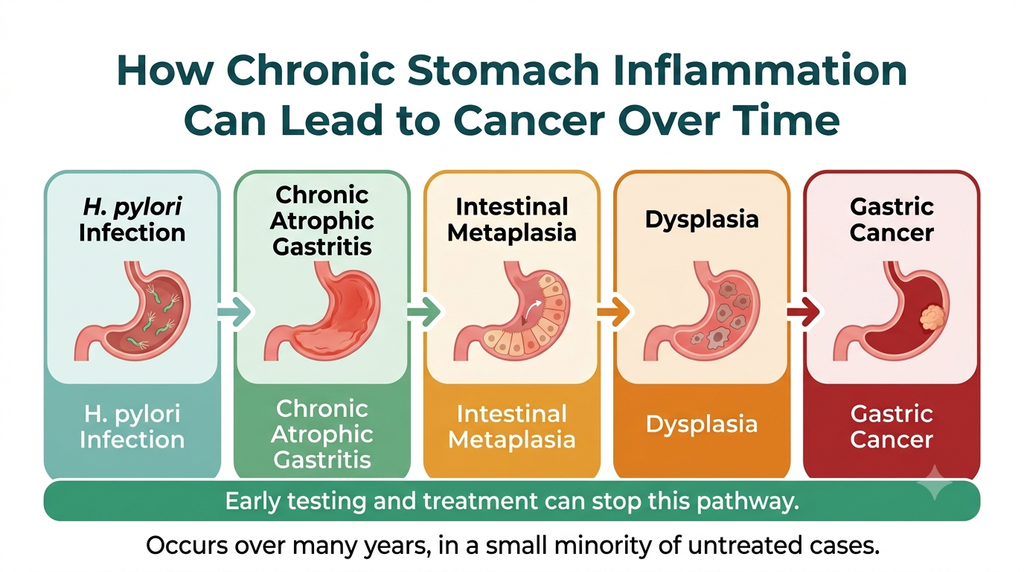
- Chronic H. pylori infection / mucosal irritation
- Chronic atrophic gastritis (long-term inflammation)
- Intestinal metaplasia (stomach lining cells altered)
- Dysplasia (precancerous cell changes)
- Gastric adenocarcinoma (in a small minority of untreated, long-term cases)
A few key points on this pathway:
- H. pylori is classified as a Group 1 (definite) carcinogen by the International Agency for Research on Cancer (IARC), part of the WHO, based on decades of epidemiological evidence. This doesn’t mean infection leads to cancer for most people — it means long-term, untreated infection is a well-established risk factor.
- Intestinal metaplasia and dysplasia can develop after years of unmanaged chronic inflammation, as normal stomach-lining cells are gradually replaced by intestine-like cells, which can in turn progress toward precancerous change.
- Some early cancers mimic ulcers. A small proportion of malignant lesions initially look and feel like ordinary peptic ulcers. Any ulcer that fails to heal after a standard course of treatment needs endoscopic evaluation and biopsy, not repeated rounds of symptom relief alone.
Stomach Ulcer Cancer Warning Signs: When to Seek Immediate Medical Evaluation
Not all stomach pain is serious, but the following symptoms warrant prompt evaluation — ideally an upper GI endoscopy:
- Unexplained or rapid weight loss
- Persistent difficulty or pain swallowing (dysphagia)
- Vomiting blood or material resembling coffee grounds
- Black, tarry stools (melena)
- Feeling full after eating very small amounts (early satiety)
- Severe, worsening upper abdominal pain, especially pain radiating to the back or not responding to standard anti-ulcer treatment
If you notice any of these, see a physician or gastroenterologist promptly — don’t wait to see if home or complementary care resolves them first.
Homeopathic Supportive Care for Ulcer Symptoms
At Olive Homeopathy Clinic, Dr. Fasil Mohammed and Dr. Mufsila K K take an individualized approach to chronic digestive complaints, considering each patient’s symptom pattern, diet, stress levels, and overall constitution rather than a one-size-fits-all remedy.
“A stomach ulcer is rarely just a local symptom — it often reflects broader factors like chronic stress, mucosal sensitivity, and lifestyle habits. Our approach with benign, uncomplicated ulcers is to support the body’s own digestive balance alongside conventional testing and treatment, not to replace it.” — Dr. Fasil Mohammed, Homeopath, Olive Homeopathy Clinic
“For patients with confirmed benign ulcers or chronic gastritis, combining individualized homeopathic care with dietary changes and stress management can support symptom relief and general digestive wellness. Where there’s any doubt about the nature of an ulcer, we always recommend endoscopic evaluation first.” — Dr. Mufsila K K, Homeopath, Olive Homeopathy Clinic
For more on digestive health and lifestyle habits, see the clinic’s YouTube channel Dr Couple or follow Dr. Fasil Mohammed and Dr. Mufsila K K on Instagram.
What homeopathic care aims to support (for confirmed benign, uncomplicated ulcers):
- Easing burning discomfort, nausea, sour belching, and bloating
- Supporting general digestive balance alongside dietary changes
- Addressing stress-related patterns that can worsen acid symptoms
- Reducing the likelihood of symptom recurrence through individualized case-taking
Remedies such as Nux Vomica, Arsenicum Album, Phosphorus, Lycopodium Clavatum, and Kali Bichromicum are commonly discussed in homeopathic literature for acidity and gastric complaints, but the right remedy depends on a full individual case history. These should only be taken under the direct supervision of a registered homeopathic doctor — not self-prescribed.
Prevention: Lowering Your Stomach Ulcer Cancer Risk
- Get tested for H. pylori (urea breath test or stool antigen test) if you have persistent acidity or chronic gastritis — ask your doctor which test is right for you.
- Be cautious with NSAIDs. Avoid regular self-medication with over-the-counter pain relievers without medical guidance.
- Support your stomach lining by limiting very spicy, greasy, or deep-fried food, acidic fruit on an empty stomach, and carbonated drinks.
- Manage stress, since stress hormones can increase acid secretion and weaken the stomach’s protective barrier — yoga, meditation, and regular sleep can help.
- Avoid tobacco and limit alcohol, both of which damage the stomach lining and slow ulcer healing.
Frequently Asked Questions
Are duodenal ulcers safer than stomach (gastric) ulcers? Yes. Duodenal ulcers are almost always benign and rarely linked to cancer. Gastric (stomach) ulcers carry a somewhat higher need for follow-up to rule out early malignant change.
Can homeopathy cure a stomach ulcer? Homeopathy can support symptom relief and general digestive wellness for confirmed benign ulcers, often alongside dietary and lifestyle changes. It is not a substitute for diagnosis or treatment of suspected malignant lesions, which require medical and oncological care.
How do I know if my stomach pain is an ulcer or just gas? Gas pain is usually brief and shifting, easing after passing gas or a bowel movement. Ulcer pain tends to be a more constant burning or gnawing sensation in the upper abdomen, often on an empty stomach or shortly after eating.
What tests determine whether an ulcer is benign or malignant? An upper GI endoscopy lets a doctor directly examine the stomach lining and take a biopsy from the ulcer edges to check for H. pylori, precancerous changes, or malignant cells.
What is the earliest sign of stomach ulcer cancer?Early stomach ulcer cancer often has no clear signs, or it mimics ordinary acidity or an ulcer. That’s why persistent symptoms that don’t respond to treatment need an endoscopy.
Visit Olive Homeopathy Clinic
If you’re worried about a stomach ulcer cancer risk, recurrent acidity, or ongoing digestive discomfort, get it properly evaluated and cared for.
- Clinic: Olive Homeopathy Clinic
- Address: ,Gracemall , Kizhisseri , Malappuram, Kerala, India
- Phone: 9020070267
- Website: olivehomeopathy.com
