
Subtotal 0,00 د.إ
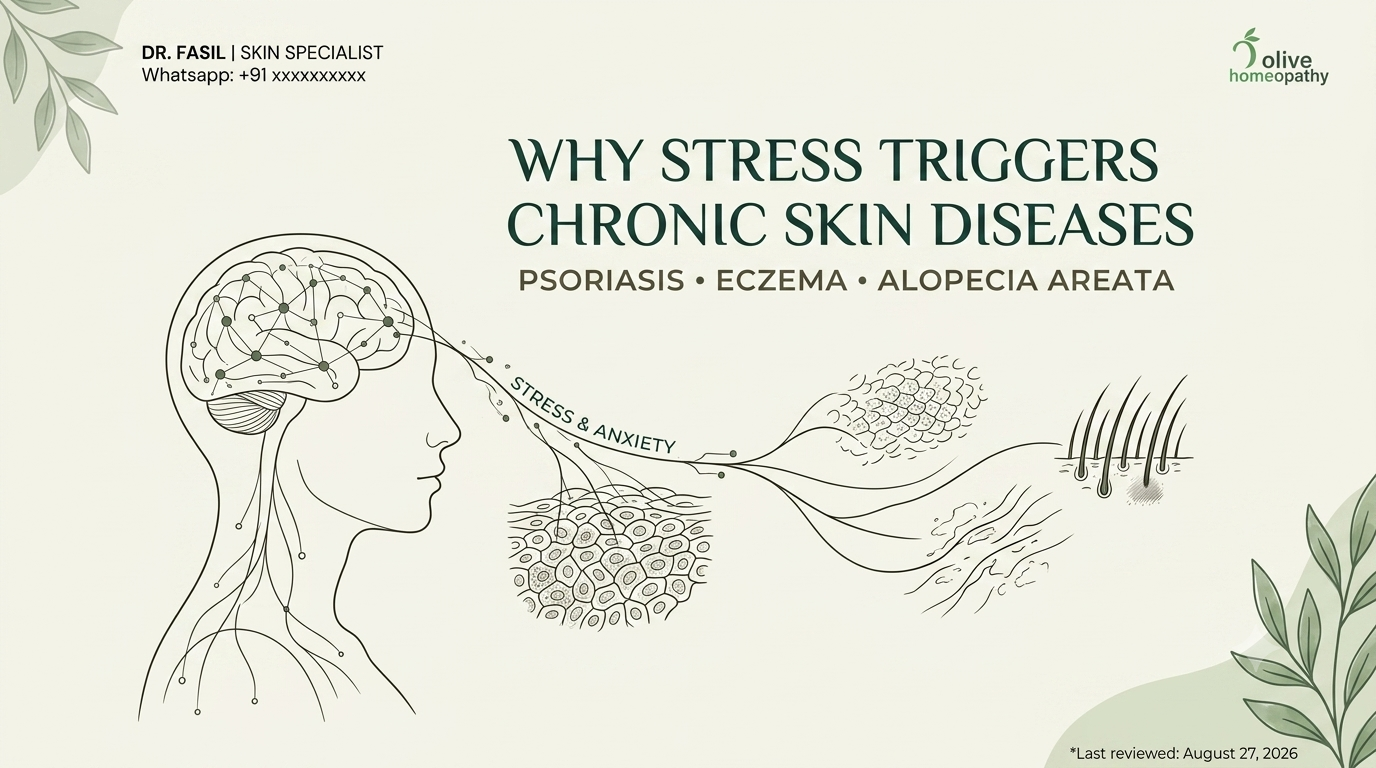
How Does Stress Link to Chronic Skin Disease?
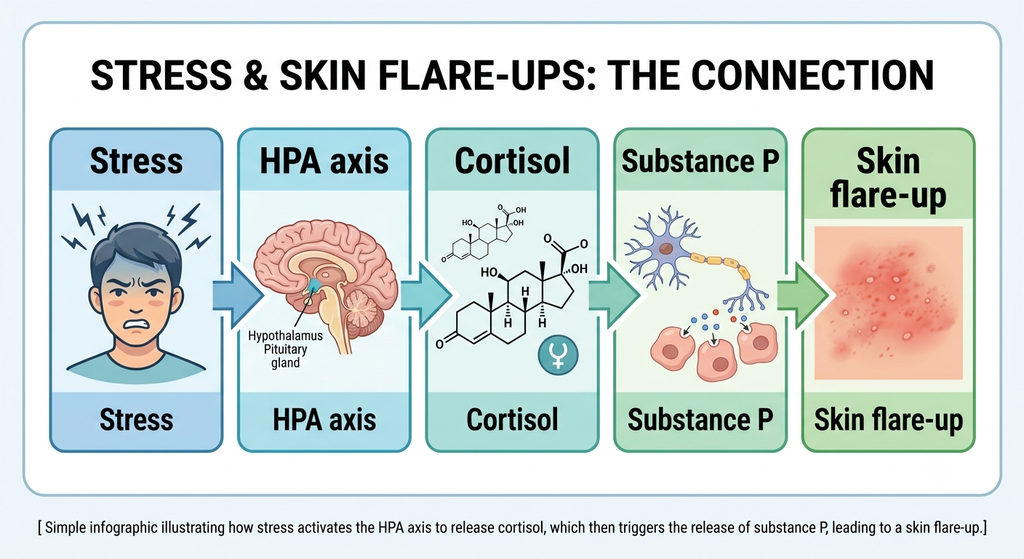
Stress and chronic skin disease share a well-documented biological link.Stress activates the Hypothalamic-Pituitary-Adrenal (HPA) axis, releasing cortisol and nerve-signaling molecules such as Substance P. Research shows these chemical messengers can overstimulate the immune system, degranulate mast cells, weaken the skin barrier, and contribute to autoimmune activity — processes that are well documented in the pathophysiology of Psoriasis, Eczema, and Alopecia Areata flare-ups.
Below, we explain how this brain-skin connection works, and how it shows up differently in three common conditions.
Table of Contents
The Science of the Brain-Skin Axis: Psychoneuroimmunology Explained
The link between stress and chronic skin disease falls under Psychoneuroimmunology (PNI), the study of how the brain, nervous system, and immune system interact.
When the body experiences acute or chronic stress, a cascade of biological changes follows:
- HPA Axis Activation: The hypothalamus signals the pituitary gland, which instructs the adrenal glands to release cortisol and adrenaline into the bloodstream.
- Neuropeptide Release: Nerve endings in the skin release Substance P, a neuropeptide that multiple animal and human studies link to mast cell degranulation, contributing to itching, redness, and localized inflammation.123
- Skin Barrier Dysfunction: Sustained cortisol elevation is associated with reduced lipid production in the outer skin layer (stratum corneum), which can lower moisture retention and increase sensitivity to irritants.
- Immune System Involvement: Chronic psychological stress has been linked in research to dysregulated immune activity, including in conditions where immune cells target skin cells or hair follicles.
Condition Breakdown: How Stress Relates to Specific Skin Diseases
The way stress and chronic skin disease interact differs by condition. Here is how it looks in each.
1. Psoriasis: Cell Turnover & Immune Activity
Psoriasis is one of the clearest examples of stress and chronic skin disease affecting each other.
- The Stress Connection: Psychological stress has been associated in clinical studies with worsened psoriasis severity, and research has linked stress-related neuropeptide activity to pro-inflammatory pathways in psoriatic skin.4
- Clinical Presentation: Skin cells turn over abnormally fast, leading to silvery scales and thick, inflamed plaques.
- A Note on Suppressive Treatments: Topical steroids can reduce visible plaques, but they act locally on the skin and do not directly address the neuro-immune stress signaling that some evidence suggests contributes to flare recurrence — which is part of the rationale for a whole-person treatment approach.
2. Eczema (Atopic Dermatitis): The Itch-Scratch Cycle & Barrier Function
In eczema, stress and chronic skin disease are linked through the itch-scratch cycle and a weakened skin barrier.
- The Stress Connection: Elevated cortisol is linked to a compromised skin lipid barrier and altered histamine activity, which can lower the itch threshold.
- Clinical Presentation: Intense itching, weeping, scaling, and lichenification (skin thickening from repeated scratching).
- A Note on Suppressive Treatments: Antihistamines and topical immune-modulating creams target skin-level symptoms but don’t address central nervous system stress arousal, which many patients report as a trigger for relapse during stressful periods.
3. Alopecia Areata: Stress and Autoimmune Hair Loss
Alopecia areata shows how stress and chronic skin disease can affect hair as well as skin.
- The Stress Connection: Alopecia areata is an autoimmune condition in which immune cells attack hair follicles; psychological stress is a recognized potential trigger and aggravating factor in the research literature, alongside genetic and other immune factors.
- Clinical Presentation: Sudden onset of smooth, patchy, circular hair loss on the scalp or body.
- A Note on Suppressive Treatments: Local corticosteroid injections can stimulate temporary regrowth in some patients, but recurrence in new patches is common, which is why addressing broader triggers is often part of a comprehensive plan.
The Homeopathic Approach: A Constitutional, Mind-Body Perspective
When stress and chronic skin disease occur together, classical homeopathy approaches the patient holistically, working from the premise that skin symptoms often reflect broader nervous-system and emotional patterns in the individual. This is the clinical philosophy practiced at Olive Homeopathy — it reflects the practitioners’ therapeutic approach rather than a claim of proven mechanism in conventional biomedical research.
“In chronic dermatological conditions like psoriasis or eczema, we view the skin as one expression of a person’s broader constitutional picture. Our approach looks at emotional vulnerability alongside the physical presentation, rather than treating the skin in isolation.” — Dr. Fasil Mohammed, Clinical Director, Olive Homeopathy
Individualized Case-Taking
Rather than prescribing a uniform remedy for a diagnosis, homeopathic case-taking at the clinic considers emotional stressors, temperament, and physical symptoms together:
- Case-Based Remedy Selection: Constitutional remedies (such as Anacardium, Arsenicum Album, or Ignatia, among others) are selected based on each patient’s individual emotional and physical picture, following classical homeopathic case-taking methodology.
- Whole-Person Care: Treatment plans are built around the individual’s overall stress profile and constitution, alongside conventional monitoring of the skin condition.
“When a patient’s homeopathic case-taking captures their specific stress profile accurately, many patients report improved emotional resilience alongside changes in the frequency and intensity of their skin flare-ups. Individual results vary.” — Dr. Mufsila K K, Co-Director & Homeopathic Skin Specialist
Note: Homeopathy’s clinical efficacy for dermatological conditions is debated within the medical community, and individual results vary. Patients on long-term conventional treatment, especially topical or systemic steroids, should not stop or taper these without medical supervision.
Clinical Expertise at Olive Homeopathy
At Olive Homeopathy Clinic in Kizhisseri, Malappuram, Kerala, Dr. Fasil Mohammed and Dr. Mufsila K K work with patients on stress and chronic skin disease, including psoriasis, eczema, and alopecia areata.
Through detailed constitutional case-taking, their clinical approach focuses on understanding the psychological and lifestyle triggers — work stress, personal loss, or chronic anxiety — that patients report alongside their physical symptoms.
About the Practitioners
Dr. Fasil and Dr. Mufsila also share health education content through their platforms:
- YouTube: @drcouple
- Instagram: @drfasilmohammed and @drmufsila
- Practo: Verified patient reviews and appointment bookings.
Frequently Asked Questions
Q1: Can stress-induced Alopecia Areata be treated with homeopathy?
Homeopathic practitioners take a case-based approach that addresses underlying emotional stressors alongside the hair loss itself. Some patients report improvement in hair regrowth without steroid dependence; however, alopecia areata’s course varies significantly by individual, and homeopathy’s efficacy for this condition is not established in mainstream clinical research. A consultation can clarify what to realistically expect for your case.
Q2: How fast does homeopathic treatment show results for chronic Eczema?
In clinical practice at Olive Homeopathy, some patients report initial relief from itching and acute inflammation within 2 to 4 weeks, with longer-term constitutional treatment continuing over several months. Timelines vary by individual and severity.This applies to eczema and other forms of stress and chronic skin disease, though results vary.
Q3: Will stopping topical steroids cause a psoriasis flare-up when starting homeopathy?
Abruptly stopping long-term topical steroids can trigger rebound flare-ups (a recognized phenomenon known as Topical Steroid Withdrawal). Anyone on long-term steroids should only taper under medical supervision — our specialists work alongside gradual, medically monitored tapering protocols rather than recommending abrupt discontinuation.
Q4: Is homeopathy effective for stress and chronic skin disease if my stress levels remain high?
Our clinical approach includes addressing stress-related patterns as part of the overall case, on the premise that supporting the nervous system alongside the skin may help some patients over time. This reflects our therapeutic philosophy rather than a guaranteed outcome, and results vary by individual.
Book Your Consultation at Olive Homeopathy
If stress and anxiety appear to be affecting your skin, surface-level treatment alone may not address everything going on. Explore a holistic, whole-person approach to your skin health with Olive Homeopathy.
- Location: Olive Homeopathy Clinic, Kuzhimanna, Malappuram, Kerala
- Consultants: Dr. Fasil Mohammed & Dr. Mufsila K K
- Book Online: Visit olivehomeopathy.com or book via Practo for in-clinic and virtual consultations.
